

Is It Too Late to Start Ballroom Dancing?
Is It Too Late to Start Ballroom Dancing?
No. And we say that with confidence, having taught hundreds of adults in Essex who asked themselves exactly that question before walking through our door.
The age people ask us this ranges from 25 to 75. The worry is always the same — that there's a window for learning to dance that has somehow already closed and there isn't. In over 20 years of teaching adult beginners, we've never once met someone who was genuinely too late to start.
When adults come to Starlight Dancing for the first time, they're not competing with anyone. They're learning a skill they genuinely want, in a room full of people who feel exactly the same way they do.
What adults have that children don't
Here's something we've noticed across decades of teaching both: adult beginners often make faster early progress than children.
Not because they're more talented — but because they bring things to a dance class that a child simply doesn't have yet. Adults can follow an explanation, ask the right questions, and genuinely understand why technique matters rather than just being told it does.
And perhaps most importantly — they actually want to be there.
The reasons our adult students give for starting
We’ve asked our students what brought them to us and over the years, the answers have settled into a pattern.
Keeping fit is one of the most common. Ballroom and Latin dancing is a proper physical workout — it strengthens your core, improves your posture, builds stamina and flexibility. It also releases endorphins in the same way that any sustained physical activity does, which means you leave a class in a genuinely better mood than when you arrived. It's exercise that doesn't feel like exercise, which for a lot of people makes all the difference to whether they actually keep doing it.
Making friends is another. The social side of dancing is something people consistently underestimate before they start. Our classes are friendly, relaxed and surprisingly good at bringing people together. Many of our longest-standing students count people they met at Starlight among their closest friends. If you're looking for a community as much as a hobby, dancing tends to deliver both.
Several of our students — particularly those who've been through a difficult period, a loss, a retirement, or a health scare — have told us that coming to class gives them something to look forward to each week. Having a regular commitment that gets you out of the house, into a room with other people, and focused on something enjoyable is genuinely good for your mental health. It breaks up the week. It gives you something to think about, practise, and improve at. It's a hobby that keeps giving.
Dancing is also one of the few activities shown to benefit memory and cognitive function. Learning new steps and sequences, remembering patterns, coordinating movement with music — it keeps the brain active in a way that many people find both challenging and surprisingly enjoyable.
And then there's simply this: you can do it with your partner, or entirely on your own. Both work perfectly well. Many couples find that learning to dance together is one of the most fun things they've done in years. Those who come alone find that the class itself provides all the social connection they need.
What a first class actually looks like
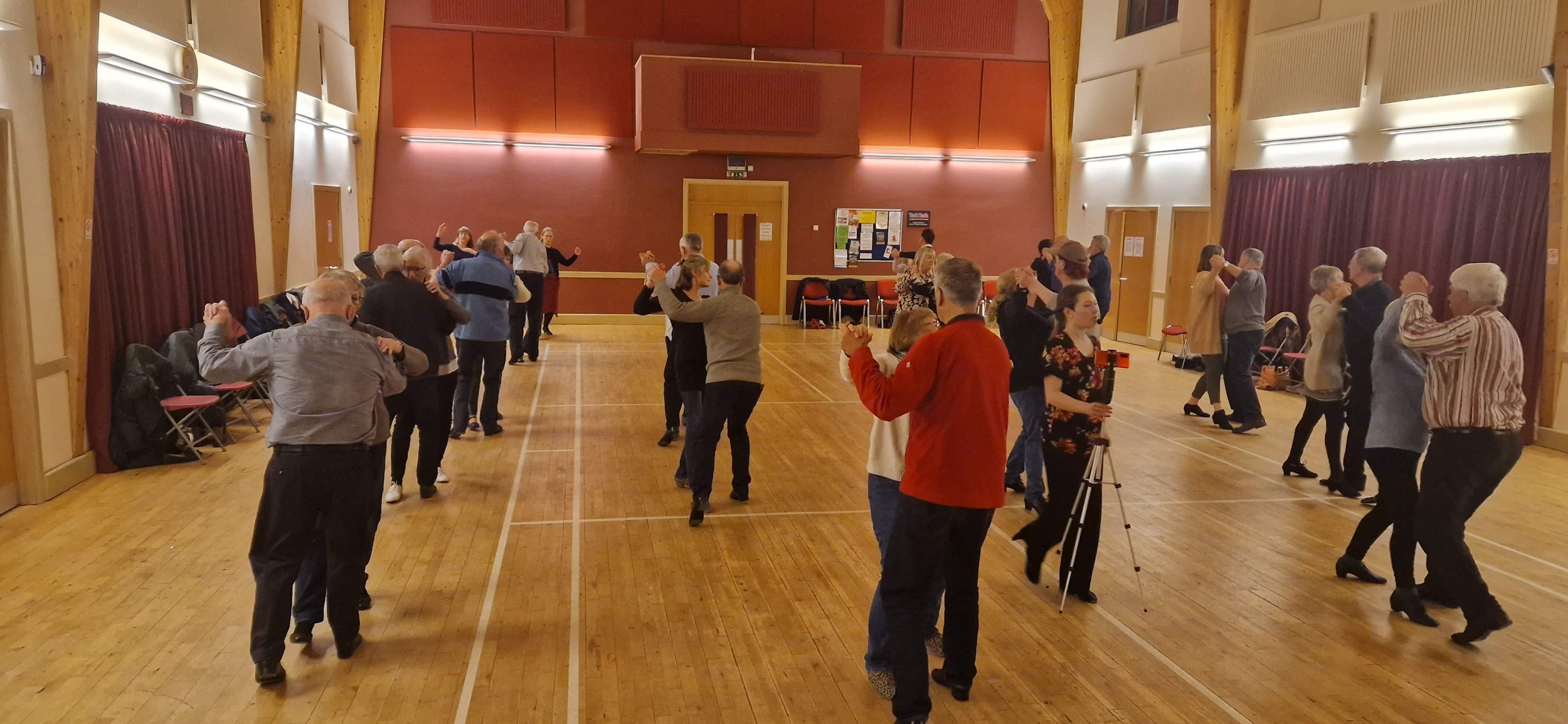
Our beginner courses in Witham run every Wednesday evening. Each course teaches one dance — just one — over 2-4 weeks (depending on how many Wednesdays are in that month), starting completely from scratch. There are no assumptions about prior experience, no pressure, and no one watching or judging.
The first class is always the hardest step. Not the dancing — just deciding to come. Almost without exception, the students who've been with us for more than a few months say the same thing: "I wish I'd started sooner."
So — is it too late?
We've taught people in their seventies who had never considered dancing before retirement. We've taught people who came to us after a bereavement, looking for something to get them out of the house and back into life. We've taught couples who'd been together for thirty years and had never once danced at a wedding. We've taught people who arrived absolutely convinced they were unteachable.
And not one of them was too late.
The only version of "too late" in ballroom dancing is the class you didn't book.
Ready to find out for yourself?
Our next beginner course starts soon — one dance, Wednesday evenings, £10 per person, no experience needed.
Tips for Choosing the Best Ballroom or Latin Shoe
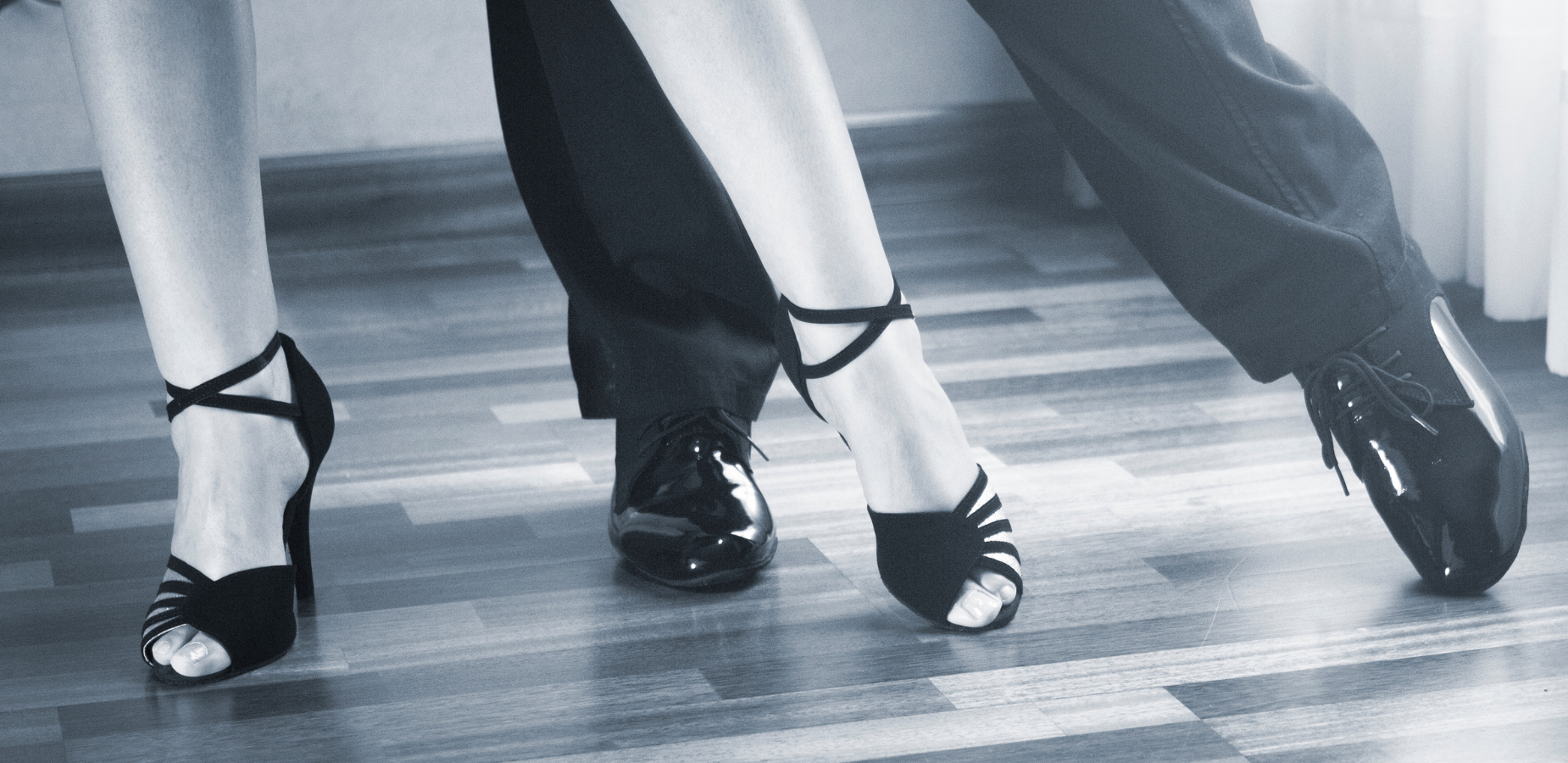
There is a wide variety of Ballroom and Latin dance shoe brands on the market, and not all of them meet the same standard of quality. A well-designed dance shoe plays a vital role in both comfort and performance, and there are several key features that set good shoes apart from poor ones.
Ballroom and Latin dance shoes are built with specialist technology that supports the dancer. High quality shoes are flexible enough to allow freedom of movement, yet supportive enough to protect the foot during extended use. A well-structured shoe should fit the foot closely, almost like a second skin to help the dancer feel connected to the floor.
The sole is another important factor: suede soles are used as they provide the right level of grip and slide for smooth, controlled movement. Design and style also matter, not only for appearance but for functionality. For example, the positioning of straps and heel shape can affect both stability and posture.
For social dancers, a versatile option is often the most practical choice. Many shoes are designed to work well for both Ballroom and Latin, reducing the need to change shoes between styles. This makes them ideal for socials practice sessions and events where a dancer may be switching between genres throughout the evening. Just slip them on and focus on what really matters, enjoying your dancing!
Reputable Ballroom & Latin Dance Shoe Brands
Ray Rose - great competitive, social and practice shoes. Look for their Sapphire range (blue label) for shoes designed for the social dancer.
International Dance Shoes - great competitive and practice shoes.
Supadance - great competitive, social and practice shoes
DSI - great competitive shoes
Freed - great competitive and social shoes
All these brands should give you fantastic quality however that quality does come at a price (read to the end for how to help this expense).

Girls Juvenile Dance Shoe
From FREED

Boys Juvenile Dance Shoe
By FREED
Teacher/Practice Shoes
Teacher Shoes or Practice Shoes are a great option sought by many for those who find less comfort in your average shoe. They provide a lot of extra stability and comfort and are designed for long periods of dancing (but they can certainly be used even if you’re only dancing a few times a week).

Practice Shoe from Ray Rose
I have no doubt that you will be able to find many cheaper dance shoes on sites such as Amazon and these shoes will work well enough for the short term. Especially if you’re only just getting into dancing and want to watch your wallet…but a fantastic long term option will be one of the above brands.
Cut the cost of your top-quality shoes!
Also good to note to all of Starlight Daning’s dancers, you can get 20% off non-discounted shoes when shopping at Ray Rose using our discount code. Speak to us to find out what that discount code is!

What is the best Ballroom Dance to learn first?
What is the best Ballroom & Latin Dance to Learn First?
It is worth mentioning that everyone finds different things easy and therefore different things difficult and there is no ‘one size fits all’ for what the easiest dance is for everyone.
Having said that, from our 20+ years of Ballroom and Latin experience and teaching a wide variety of people from around the world, we know what people generally find easier and the answer may not be what you expected.
A lot of people tend to presume that a dance like the Waltz, with its slow tempo and only three beats per bar, would make it the easiest dance to get started with however it tends to be the Quickstep! Surprising, I know!
When watching Strictly Come Dancing, you may think of the Quickstep as being a lively, hop-skip-jumpy dance and whilst that is true for competitions, when danced socially this is a lot more calm.
Not only that but Quickstep repeats itself very quickly and doesn’t need to have corner groups. It’s possible to use your basics to bend around the corners before you have your first corner group such as your Spin Turn or Tipple Chasse. And once you have your basics, it is easy to add in your next basic group, the lockstep.
With the right tuition and guidance, all Ballroom and Latin dances can be made to feel easy and we highly recommend giving them all a go!
Speaking of which, one of the best Latin American dances to learn first would have to be the Cha Cha Cha. These basics also repeat themselves quickly with additional groups such as the New York’s or Hand to Hands being a nice change from the basic movement whilst still resembling a very similar action.
And once you have learnt the Cha Cha Cha, the Rumba basics will feel very familiar as they follow a similar pattern and technique. The differences being that the Rumba is slower and with a side step instead of your ‘side close side’ from the Cha Cha Cha. You may think that this makes the Rumba sound easier, however the holding of beat 1 (rather than stepping on it in the Cha Cha) can often make this a little fiddly at first.
If you are interested in learning to dance, we offer a wide variety of Beginner Courses throughout the year. Click below to see what courses we have coming up next!